

The Engineer's Guide to Specifying and Selecting Microwave Antennas
Author:Xiamen Lineyi Electronics Co.,Ltd.
Click:
Time:2025-12-25 15:29:37
A successful microwave system hinges on one critical decision made at the design stage: microwave antenna selection. Choosing the wrong antenna can lead to weak signals, interference, and complete system failure, regardless of how advanced your other components are. This process is far more nuanced than simply picking the largest dish or the most expensive model. It requires a systematic evaluation of technical antenna specifications against your precise application requirements and operational environment.
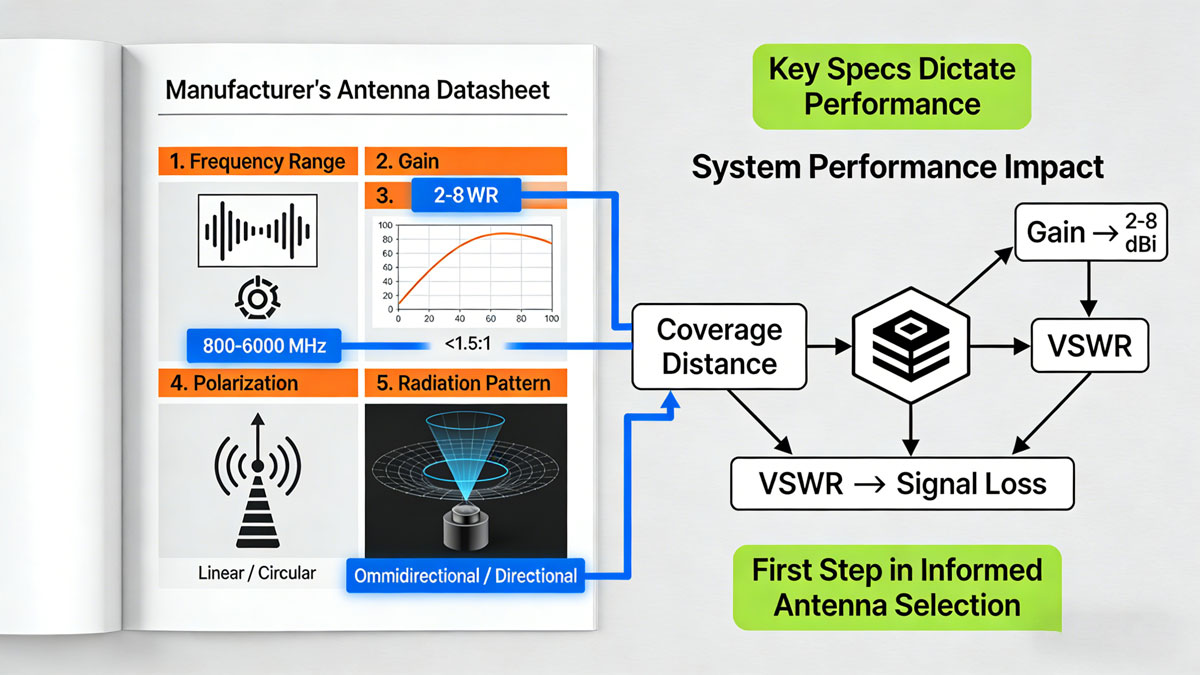 Understanding a manufacturer's datasheet is the first step in informed antenna selection. Key specs directly dictate system performance.
Step 1: Define Your Core Technical Requirements
The selection process begins by answering fundamental questions about your system's needs.
- Operating Frequency Band:
- Required Gain and Beamwidth:
- Polarization:
Step 2: Evaluate Performance-Critical Specifications
Beyond the basics, these parameters ensure reliability and signal integrity.
- VSWR (Voltage Standing Wave Ratio):
- Front-to-Back Ratio and Sidelobe Suppression:
Step 3: Match the Antenna Type to the Application
With your specs defined, choose the antenna technology that delivers them.
- High-Gain, Long-Distance Links: Parabolic Dish Antennas are the classic choice, offering the best gain-to-size ratio for point-to-point telecom backhaul and satellite earth stations.
- Wide-Area Coverage & Sectorization: Sectoral or Panel Antennas provide a fan-shaped beam, ideal for point-to-multipoint base stations.
- Broadband Testing & Feed Applications: Horn Antennas offer wide bandwidth and stable patterns, perfect for lab environments or as feeds for larger dishes.
- Advanced Radar & 5G Beamforming: Phased Array Antennas provide electronic beam steering without moving parts, essential for modern AESA radar and Massive MIMO.
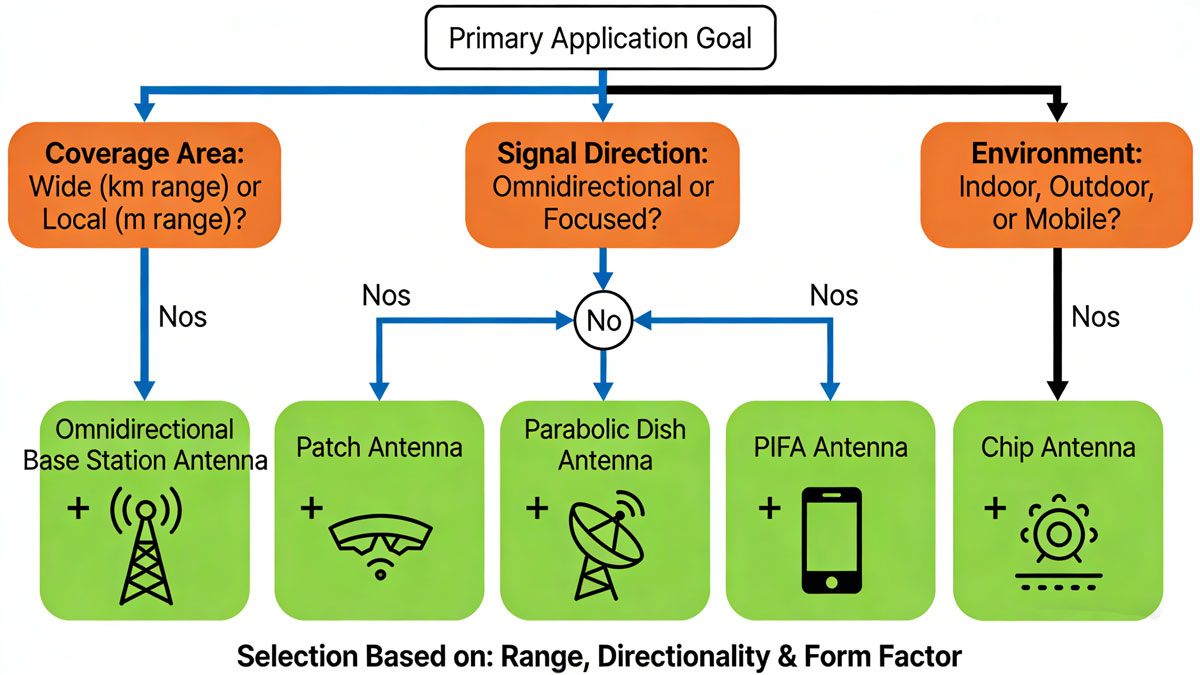 A simplified selection flowchart to guide the initial matching of antenna type to primary application goals.
Step 4: Account for Environmental and Mechanical Factors
Antenna specifications on paper must survive the real world. This is a critical phase of microwave antenna selection.
- Environmental Rating: For outdoor antenna installation, the enclosure must have a suitable IP (Ingress Protection) rating (e.g., IP65) to withstand rain, dust, and humidity.
- Wind Load and Material: The antenna must survive maximum wind speeds at your site. Material choice (e.g., aluminum vs. stamped steel) affects durability, weight, and cost.
- Temperature Range: Ensure the antenna's operational temperature range covers your region's extremes.
By methodically working through these steps—defining needs, evaluating specs, matching technology, and confirming environmental fitness—you transform microwave antenna selection from a guessing game into a precise engineering discipline. In the next article, we will detail how to ensure these carefully selected antennas are installed and aligned correctly to deliver their designed performance.
Streamline your microwave antenna selection process with expert support. Xiamen Lineyi provides not only a wide range of antennas with clear, reliable antenna specifications but also pre-sales engineering consultation. [Contact our team] with your project parameters for a personalized recommendation.

点击右上角
分享给朋友吧







 Long by picture save/share
0
Copyright © Xiamen Lineyi Electronics Co., Ltd All rights reserved.
点击右上角
分享给朋友吧
