

The Unique RF Environment of Agricultural Drones: Challenges and Requirements
Author:Xiamen Lineyi Electronics Co.,Ltd.
Click:
Time:2025-09-19 21:37:13
The modern farm is a symphony of technology, and agricultural drones have rapidly become first-chair musicians. They enable precision spraying, crop monitoring, and data collection on an unprecedented scale, revolutionizing productivity and sustainability5. However, this symphony is played in a notoriously harsh and complex RF (Radio Frequency) environment. For the drone antenna for agriculture, this environment presents a unique set of challenges that can silence the music entirely if not properly addressed.
A drone's antenna is its lifeline—the critical conduit for control signals, telemetry data, and, in some cases, real-time video feed. When this link fails, the drone becomes, at best, an expensive liability and, at worst, a safety hazard. This article delves into the specific RF challenges faced in agriculture and outlines the resulting requirements for robust anti-interference antenna design.
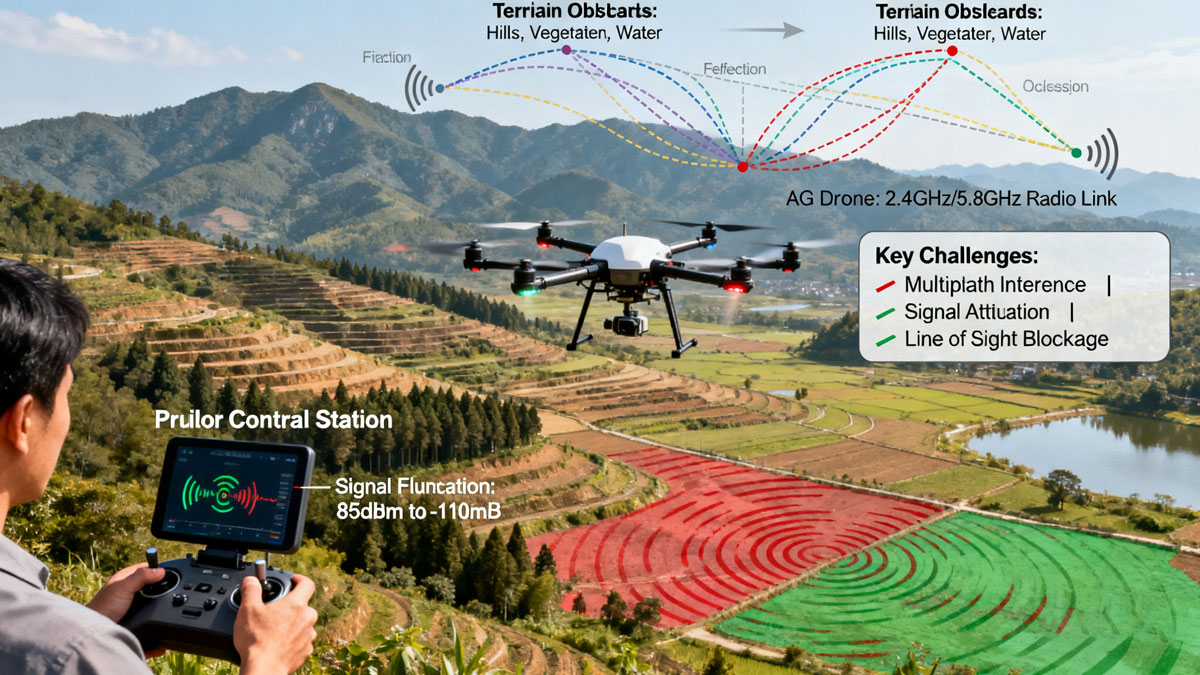
Key RF Challenges in Agricultural Settings
- Vast Distances and Limited Line-of-Sight (LoS): Farms can span thousands of acres. Maintaining a strong, reliable control link over a kilometer or more is a basic requirement. The curvature of the earth and the low altitude of drone flight can break the visual and RF line-of-sight, especially in rolling terrain. A robust drone antenna for agriculture must be optimized for long-range propagation.
- Physical Obstacles and Signal Multipath: Unlike open skies, farms are filled with signal-disrupting obstacles.
- Electromagnetic Interference (EMI) from Farm Equipment: A modern farm is a hub of industrial activity. Large equipment like tractors, combines, and irrigation systems often generate significant electromagnetic noise across a broad spectrum. This EMI can drown out the delicate signals from your drone, leading to control latency or dropouts.
- Crowded Spectrum and Co-Channel Interference: Agriculture often takes place in rural areas, but the RF spectrum is far from empty. Besides other drones (a growing issue during spraying season), there may be wireless weather stations, IoT sensors, and other communication systems operating in similar license-free bands (e.g., 2.4 GHz, 915 MHz). This congestion leads to co-channel interference, degrading link quality.
Critical Antenna Requirements for Agricultural Drones
These challenges directly inform the design and selection criteria for antennas on agricultural drones:
- High Gain and Efficiency: To overcome path loss over long distances, the antenna must be efficient at radiating power and have high gain to focus that energy in the required direction, effectively extending the operational range.
- Robust Polarization: Linear polarization (common in Wi-Fi) is highly susceptible to signal loss when the drone rotates (a phenomenon known as 'polarization mismatch'). Circularly Polarized (CP) antennas are vastly superior for drones. They maintain the link regardless of the drone's orientation and are inherently better at rejecting multipath interference, as reflected waves often have opposite polarization and are rejected by the antenna.
- Diversity and MIMO Capabilities: Relying on a single antenna is a point of failure. Modern systems use Multiple-Input Multiple-Output (MIMO) technology with multiple antennas. This allows the system to combine signals from different paths or switch to the antenna with the best signal, dramatically improving reliability in challenging multipath environments3.
- Environmental Durability: An agricultural drone antenna must be built to withstand harsh conditions: exposure to pesticides, fertilizers, UV radiation, extreme temperatures, and physical impact. Connectors need to be sealed (e.g., IP67-rated), and housings must be made of resistant materials.
- Optimal Frequency Band Selection: While 2.4 GHz is common, lower frequency bands like 868 MHz or 915 MHz offer superior propagation characteristics. Their longer wavelengths provide better penetration through foliage and better performance in non-line-of-sight conditions, making them a popular choice for long-range agricultural data links.
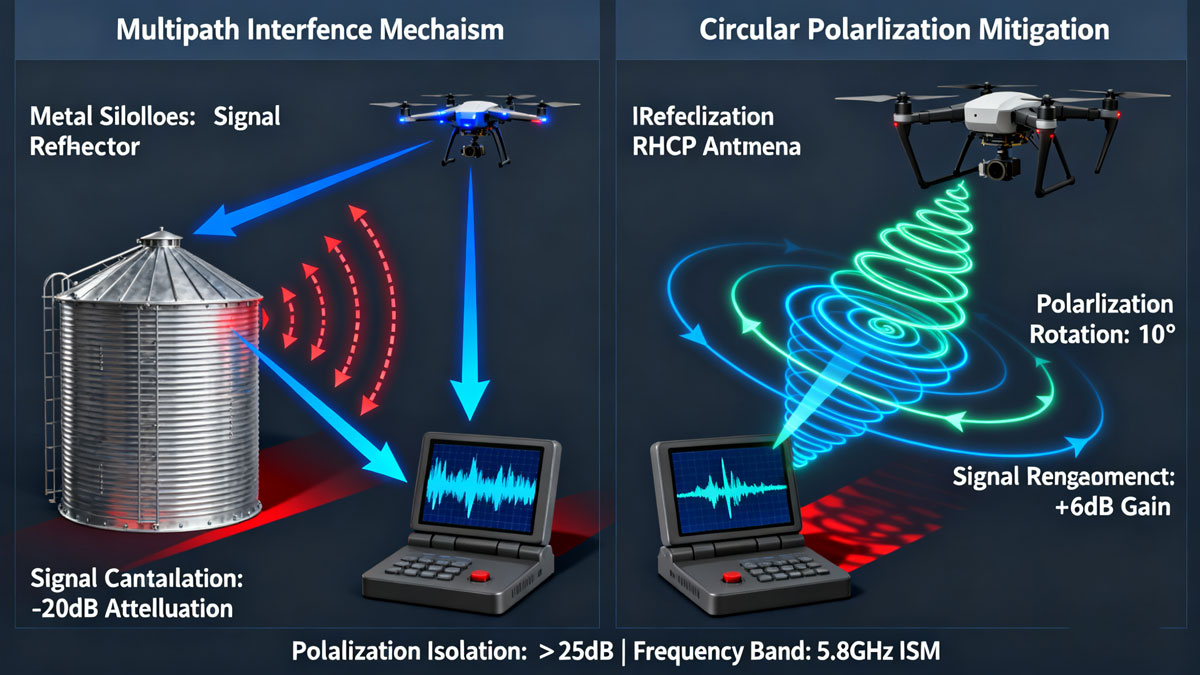
Understanding this RF battlefield is the first step in designing and selecting the right communication system. The demands placed on a drone antenna for agriculture are significantly higher than those for a consumer photography drone, necessitating purpose-built anti-interference antenna design solutions.
Xiamen Lineyi's antennas are engineered from the ground up for the harsh realities of modern agriculture. Browse our range of high-gain, circularly polarized drone antennas built for reliability and range.

点击右上角
分享给朋友吧







 Long by picture save/share
0
Copyright © Xiamen Lineyi Electronics Co., Ltd All rights reserved.
点击右上角
分享给朋友吧
