

Choosing the Right RF Connector for Antenna Integration: SMA, IPEX, and MMCX Explained
Author:Xiamen Lineyi Electronics Co.,Ltd.
Click:
Time:2026-02-28 17:14:23
In modern wireless communication devices, performance stability depends not only on the antenna itself, but also on the quality and suitability of the RF connector used in the system. Whether for a WiFi antenna, Cellular antenna, GPS antenna, or other RF antenna solutions, connector selection plays a critical role in maintaining signal integrity.
Many integration challenges—such as signal loss, impedance mismatch, or unstable performance—are often traced back to improper connector choices rather than antenna design flaws.
At Xiamen Lineyi Electronics Co., Ltd., we provide professional RF connector and antenna solutions for industrial and commercial wireless applications. This article introduces the key differences between common RF connector types and how to select the right one for antenna integration.
1. Why RF Connectors Matter in Antenna Systems
An antenna transmits or receives signals, but the RF connector ensures those signals travel efficiently between the antenna and module.
Poor connector selection may cause:
- Increased insertion loss
- Higher VSWR (Voltage Standing Wave Ratio)
- Signal reflection and impedance mismatch
- Long-term mechanical instability
Because most antenna systems operate at 50-ohm impedance, the connector must maintain consistent impedance to preserve signal quality.
2. SMA Connector: The Industry Standard
The SMA connector is one of the most widely used RF connector types in antenna applications.
Key Features:
- 50-ohm impedance
- Secure threaded locking mechanism
- Suitable for frequencies up to several GHz
- Durable and vibration resistant
Typical Applications:
- External WiFi antenna systems
- Cellular antenna installations
- Industrial gateways
- Laboratory RF antenna setups
SMA connectors are preferred for outdoor or high-reliability environments due to their mechanical stability.
3. IPEX Connector: Compact Internal Solution
IPEX (also known as U.FL in some markets) is a miniature RF connector commonly used inside compact devices.
Key Features:
- Small form factor
- Direct board-mount installation
- Easy internal routing
- Suitable for short cable lengths
Typical Applications:
- Internal WiFi antenna connections
- Embedded GPS antenna modules
- Compact IoT tracking devices
Because IPEX connectors are snap-on types without threaded locking, they are typically used in low-vibration internal assemblies.
4. MMCX Connector: Balanced Between Size and Durability
The MMCX connector sits between SMA and IPEX in size and mechanical structure.
Key Features:
- Smaller than SMA
- Locking snap mechanism
- Rotatable interface
- Suitable for mid-frequency RF antenna use
Typical Applications:
- GPS antenna modules
- Portable communication equipment
- Medium-sized wireless terminals
MMCX connectors offer better retention than IPEX while remaining more compact than SMA.
5. Key Selection Factors for RF Connector and Antenna Matching
Selecting the correct RF connector involves more than choosing by size.
1️⃣ Impedance Matching
Ensure the connector, cable, and antenna all maintain 50-ohm impedance to avoid reflection loss.
2️⃣ Frequency Range
Verify that the RF connector specification supports the operating bands of the WiFi antenna, Cellular antenna, or GPS antenna.
3️⃣ Cable Length and Loss
Long cable assemblies increase attenuation. Connector quality becomes more important in extended runs.
4️⃣ Installation Environment
Consider vibration, temperature variation, outdoor exposure, and assembly frequency.
5️⃣ Maintenance Requirements
Field-replaceable external antenna systems often benefit from threaded connectors such as SMA.
6. Integration with Multi-Antenna Systems
Modern wireless devices commonly integrate:
- Cellular antenna for wide-area connectivity
- WiFi antenna for local communication
- GPS antenna for positioning
- Additional RF antenna for sub-GHz IoT

Typical antenna integration structure: the antenna connects to the RF module through a matched 50-ohm RF connector and coaxial cable assembly, ensuring minimal signal loss.
In such systems, connector arrangement affects isolation and signal routing. Proper shielding and spacing reduce interference and improve overall wireless stability.
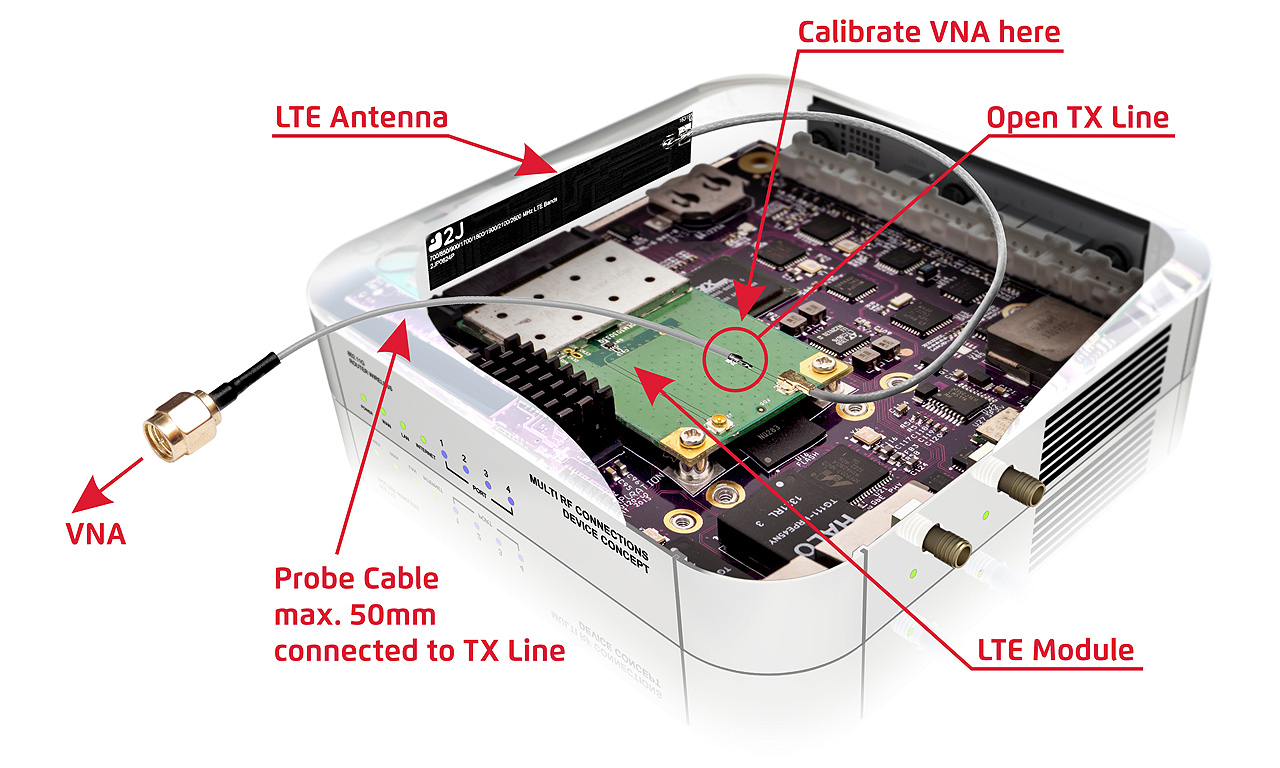
Multi-antenna integration in wireless devices requires proper connector selection, isolation spacing, and impedance control to maintain signal integrity across Cellular antenna, WiFi antenna, and GPS antenna systems.
7. Common Mistakes in Connector Selection
Some typical integration issues include:
- Using consumer-grade connectors in industrial environments
- Ignoring insertion loss specifications
- Routing cables in parallel near noisy components
- Mixing impedance ratings
Proper RF connector planning during the early design stage avoids costly redesign later.
An antenna system is only as reliable as the connector that links it to the communication module. SMA, IPEX, and MMCX connectors each serve specific application scenarios depending on size, durability, and operating frequency.
By understanding connector differences and matching them correctly with WiFi antenna, Cellular antenna, GPS antenna, and other RF antenna solutions, engineers can significantly improve overall wireless system performance.
Xiamen Lineyi Electronics Co., Ltd. provides comprehensive RF connector and antenna integration solutions supporting industrial IoT, communication equipment, and wireless device manufacturing.
For more information, please visit:
https://u179901.yz168.cc/?&view=1

点击右上角
分享给朋友吧







 Long by picture save/share
0
Copyright © Xiamen Lineyi Electronics Co., Ltd All rights reserved.
点击右上角
分享给朋友吧
