

5G vs WiFi: Security, Applications and Future Trends
Author:Xiamen Lineyi Electronics Co.,Ltd.
Click:
Time:2025-11-19 16:08:19
While speed and performance often dominate the 5g vs wifi discussion, security, reliability, and practical applications are equally important considerations. Both technologies have evolved sophisticated security models and excel in different usage scenarios. Understanding these aspects is crucial for determining is 5g better than wifi for your specific security and application needs.
This second part of our comparison examines security architectures, real-world applications, and future developments in both technologies.
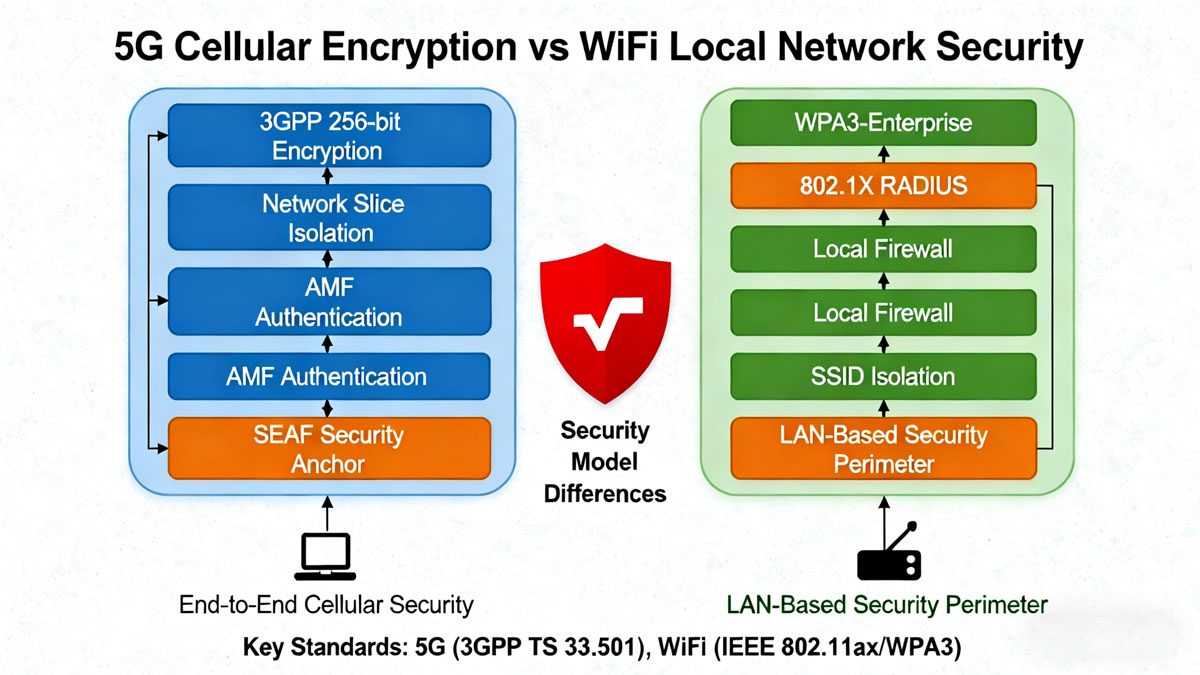
Security Models and Vulnerabilities
5G Security Advantages:
- SIM Authentication: Hardware-based security using SIM cards
- Network-Level Encryption: End-to-end protection from device to core network
- IMSI Encryption: Prevents tracking of individual devices
- Regular Security Updates: Carrier-managed security patches
- Isolated Network Slices: Critical applications run on separate virtual networks
WiFi Security Evolution:
- WPA3 Encryption: Latest security standard with individualized data encryption
- Easy Connect: Simplified secure onboarding of IoT devices
- OWE (Opportunistic Wireless Encryption): Encrypts open networks
- User Management: Individual user accounts and access controls
- Network Segmentation: Isolates devices within local network
Reliability and Consistency
The 5g vs wifi performance debate extends beyond speed to reliability metrics.
5G Reliability Factors:
- Network Congestion: Performance varies with user load in the area
- Coverage Gaps: Signal strength depends on location relative to cell towers
- Weather Resistance: Generally robust in various weather conditions
- Carrier Dependency: Quality depends on mobile operator's network investment
WiFi Reliability Characteristics:
- Consistent Performance: Stable within coverage area
- Interference Issues: Susceptible to other devices in unlicensed spectrum
- Quality Control: Performance managed by network administrator
- Power Dependency: Requires local power source for operation
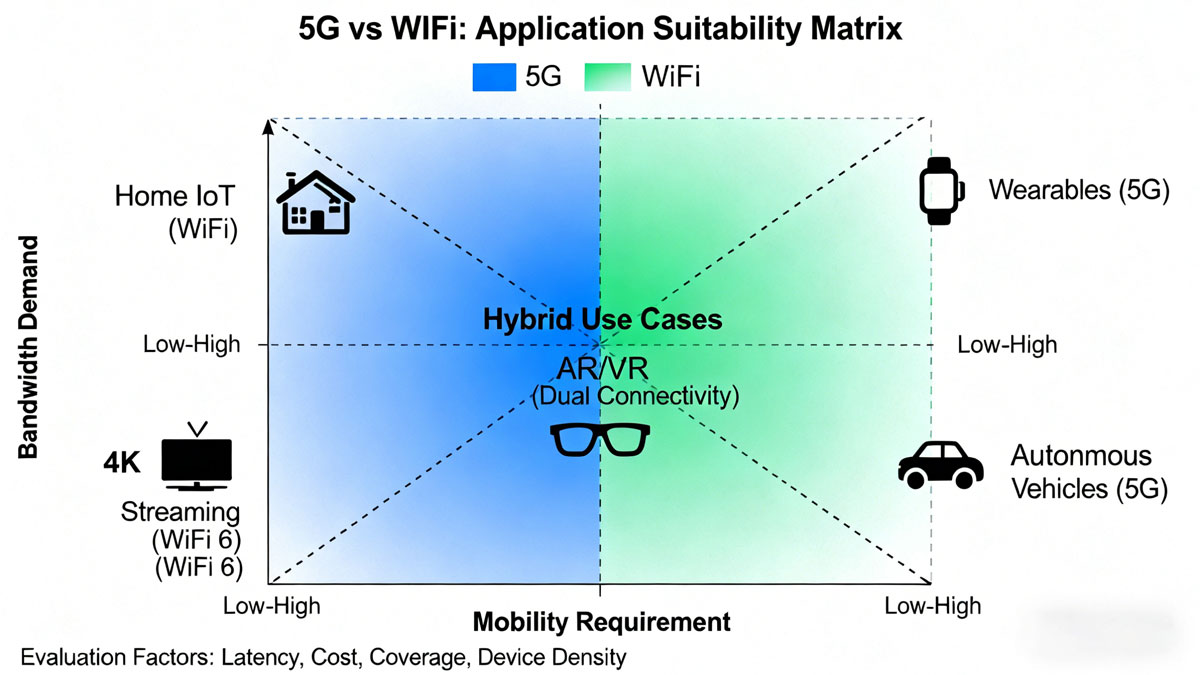
Practical Applications and Use Cases
5G Excels in These Applications:
- Mobile Connectivity: Smartphones, tablets, and mobile devices
- IoT Deployments: Smart city infrastructure and wide-area sensors
- Autonomous Vehicles: Low-latency vehicle-to-everything communication
- Remote Locations: Internet access where wired infrastructure is unavailable
- Emergency Services: Always-available connectivity
WiFi Dominates in These Scenarios:
- Home Networks: Multiple devices in fixed locations
- Office Environments: High-density device connectivity
- Media Streaming: Consistent high-bandwidth for video consumption
- Gaming: Low-latency local network gaming
- Smart Home Devices: Local control and automation
Cost Considerations
5G Cost Structure:
- Subscription Fees: Monthly plans with data caps
- Device Costs: Embedded in smartphone prices or separate data plans
- Network Dependency: Pricing varies by carrier and location
- Roaming Charges: Additional costs when traveling internationally
WiFi Economics:
- One-Time Equipment Cost: Router and access point purchases
- Monthly Internet Bill: Fixed broadband subscription
- Scalability: Adding devices typically doesn't increase costs
- Local Management: No per-device subscription fees
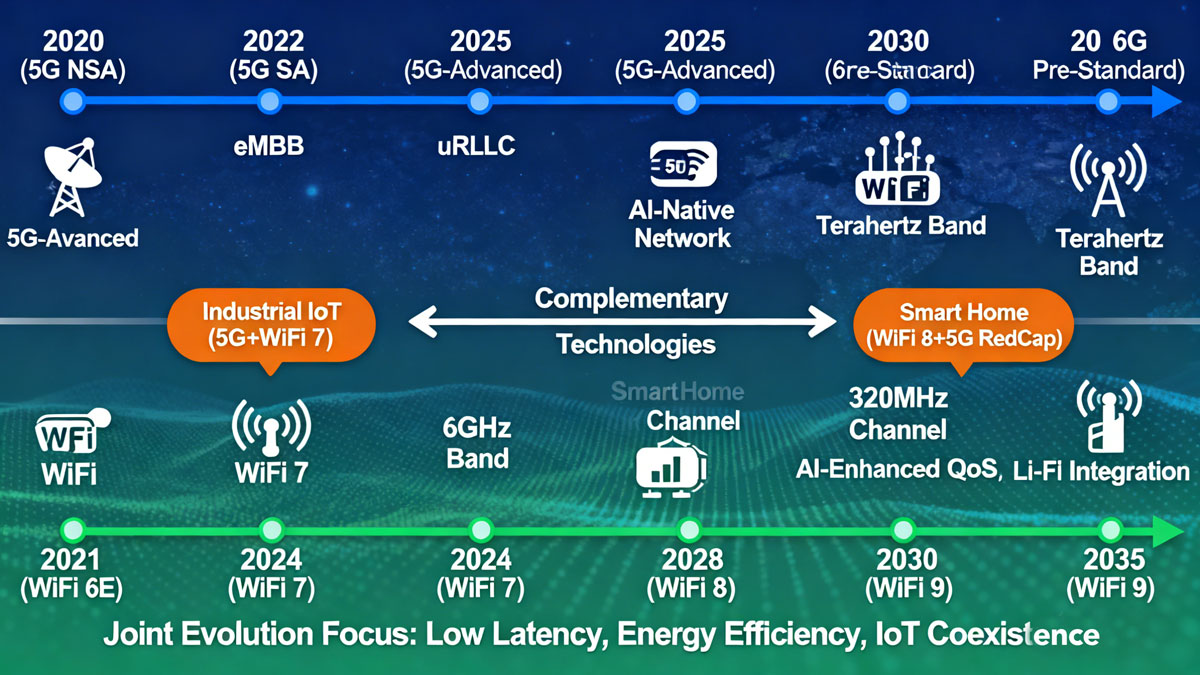
Future Technology Trends
5G Evolution:
- 5G-Advanced: Enhanced capabilities starting in 2024
- Network Slicing Maturity: More sophisticated virtual networks
- Integrated Sensing: Combining communication with environmental sensing
- AI Optimization: Intelligent network management
WiFi Development:
- WiFi 7: 320 MHz channels and multi-link operation
- 6 GHz Expansion: Additional spectrum for reduced congestion
- Seamless Roaming: Better handoff between access points
- IoT Optimization: Enhanced support for low-power devices
Making the Right Choice
The question of is 5g better than wifi doesn't have a one-size-fits-all answer. Consider these factors:
Choose 5G When:
- You need mobility and wide-area coverage
- Deploying IoT devices across large areas
- Operating in areas without fixed broadband
- Requiring carrier-managed security
Choose WiFi When:
- Connecting multiple devices in fixed locations
- Needing consistent high-bandwidth performance
- Managing your own network security
- Operating in dense device environments
Whether you need 5G antennas for mobile connectivity or WiFi solutions for local networks, Xiamen Lineyi provides high-quality components for both technologies. [consult with our technical team] to find optimal solutions for your connectivity needs.

点击右上角
分享给朋友吧







 Long by picture save/share
0
Copyright © Xiamen Lineyi Electronics Co., Ltd All rights reserved.
点击右上角
分享给朋友吧
