

Defining Industrial Ruggedness: Key Standards for Smart Card Connectors
Author:Xiamen Lineyi Electronics Co.,Ltd.
Click:
Time:2025-09-18 10:47:05
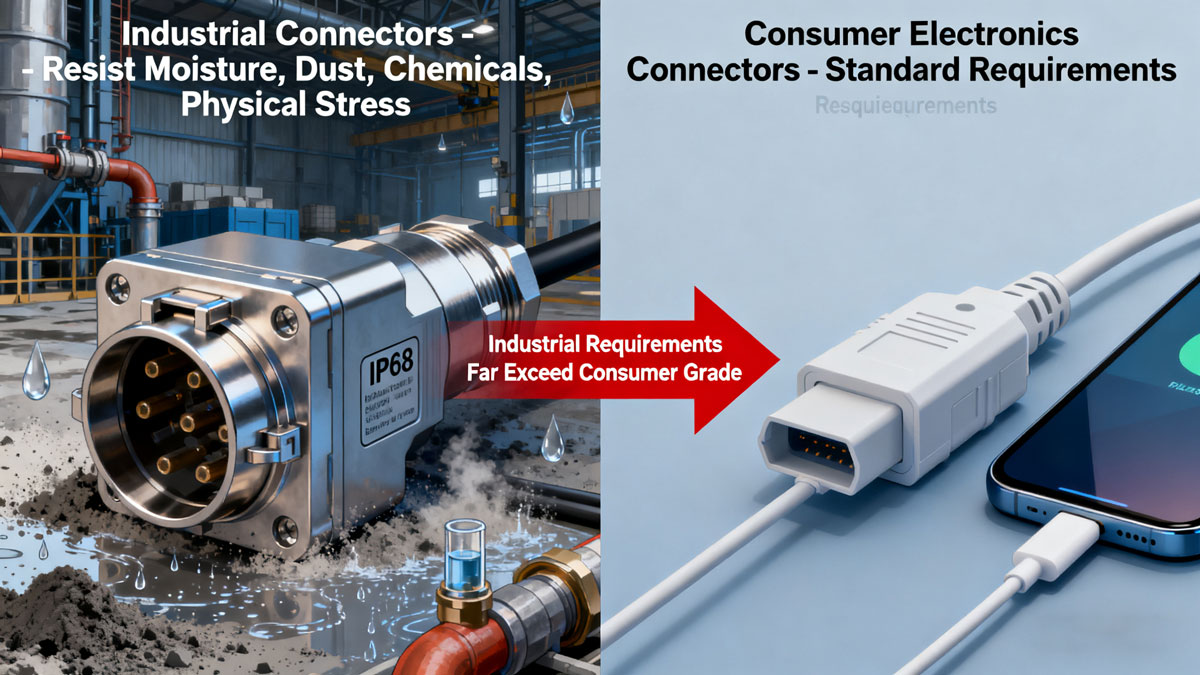
In the world of industrial automation, IoT, and outdoor telecommunications, connectivity is the lifeline of operations. A failure in a simple smart card connector can lead to catastrophic system downtime, costly repairs, and data integrity issues. Unlike their consumer-grade counterparts, industrial smart card connectors are engineered to withstand extreme conditions, from high-pressure washdowns and corrosive chemicals to constant vibration and temperature swings.
But what truly separates an industrial component from a commercial one? The answer lies in adherence to rigorous international standards. These standards provide a common language for designers, manufacturers, and end-users to specify, evaluate, and trust the performance and durability of a IC socket or SIM holder in demanding applications.
This article deciphers the key standards that define ruggedness for industrial smart card connectors, providing a roadmap for selecting components guaranteed to deliver long-term reliability.
The Foundation: IEC 60603-1 and General Performance
The IEC 60603-1 standard serves as a foundational generic specification for connectors used with printed circuit boards, including many types of smart card connectors1. It establishes 'uniform specifications, type test requirements, and quality assessment procedures'1.
- What it covers: This standard outlines general requirements for aspects like electrical performance (insulation resistance, dielectric withstanding voltage), mechanical durability (mating cycles, mechanical operation), and environmental testing (temperature, humidity).
- Why it matters: While not exclusively for industrial use, compliance with IEC 60603-1 signifies that a connector has been built to a recognized baseline of quality and reliability. It's the starting point from which industrial-specific enhancements are made. It's important to note that this standard 'does not cover connectors primarily for use at frequencies above 3 MHz,' focusing instead on the fundamental electrical and mechanical properties1.
The Benchmark of Durability: MIL-STD-1344
For connectors destined for the most extreme environments—think aerospace, defense, and heavy industrial machinery—MIL-STD-1344 is a gold standard. This U.S. military standard outlines test methods for electrical and electronic components, emphasizing their ability to perform under severe mechanical and environmental stress.
- Key Tests Included:
- Real-World Example: A high-performance IC socket designed for industrial or aerospace use, like the *724-AG410D* from Thomas & Betts, explicitly lists passing MIL-STD-1344 tests for vibration, shock, and durability, providing a clear indicator of its ruggedness3.
The Seal of Approval: IP Ratings (IEC 60529)
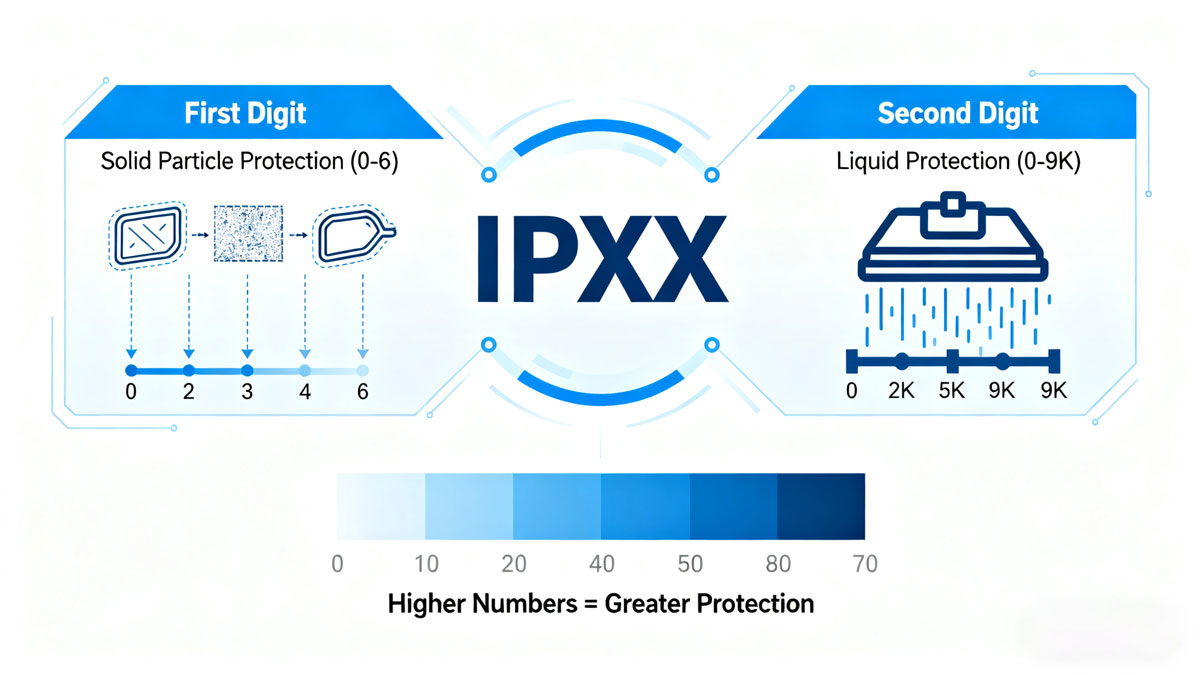
Perhaps the most directly relevant standard for waterproof performance is the Ingress Protection (IP) Code governed by IEC 60529. This rating classifies the degree of protection provided against solid objects (like dust) and liquids.
- Understanding the Code: The code is written as IPXY, where 'X' is the solid particle protection level (0-6) and 'Y' is the liquid ingress protection level (0-9K). For a waterproof SIM holder, the liquid rating is critical.
- Critical Ratings for Industrial Use:
The Hallmark of Quality Assurance
Beyond performance standards, quality assessment standards are crucial. The IECQ QC 080000 framework (Hazardous Substance Process Management) is critical for ensuring components are compliant with global restrictions like the RoHS (Restriction of Hazardous Substances) directive. This ensures the durable IC socket is not only robust but also environmentally compliant and safe for use in various markets.
The Standardized Language of Reliability
For engineers and procurement specialists, specifying connectors that meet these standards is not just a technical exercise—it's a risk mitigation strategy. By demanding compliance with IEC 60603-1, MIL-STD-1344, and specific IP ratings, you are adopting a standardized, globally recognized language of reliability.

点击右上角
分享给朋友吧







 Long by picture save/share
0
Copyright © Xiamen Lineyi Electronics Co., Ltd All rights reserved.
点击右上角
分享给朋友吧
