

Stainless Steel vs. Brass SMA Connectors: A Deep Dive into Harsh Environment Performance
Author:Xiamen Lineyi Electronics Co.,Ltd.
Click:
Time:2026-02-02 15:32:53
In the demanding world of radio frequency (RF) connectivity, especially within harsh environments like marine, industrial, or outdoor settings, the choice of connector material is not merely a detail—it is a critical determinant of system reliability, longevity, and performance. Among the various RF connector types, the SubMiniature version A (SMA) connector stands out for its widespread use in applications ranging from telecommunications to aerospace. When these connectors face constant assault from moisture, salt spray, chemicals, and temperature extremes, the debate often narrows down to two primary material contenders: stainless steel SMA connector assemblies and their brass SMA connector corrosion-prone counterparts. This article explores the fundamental properties, advantages, and limitations of each material, guiding you to make an informed decision for your specific harsh environment application.

The Fundamental Material Properties: Strength vs. Machinability
At its core, the choice between stainless steel and brass is a trade-off between inherent material characteristics.
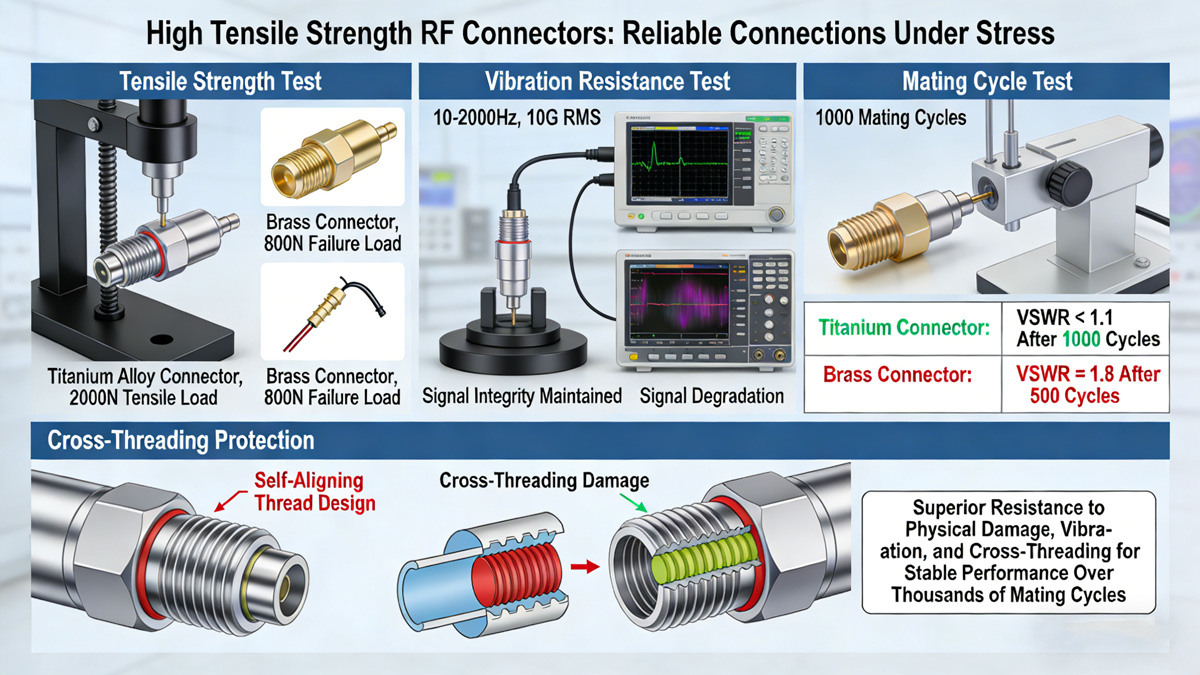
Stainless Steel SMA Connectors are renowned for their exceptional strength and durability. Stainless steel, typically grades like 303 or 304, is an iron-based alloy containing a minimum of 10.5% chromium. This chromium content is the key to its corrosion-resistant RF connector properties. It forms a passive, invisible oxide layer on the surface that protects the underlying metal from oxidation and rust. This intrinsic quality makes a stainless steel SMA connector an excellent default choice for harsh environments. Its high tensile strength provides superior resistance to physical damage, vibration, and cross-threading, ensuring a stable and reliable connection over many mating cycles.
Brass SMA Connectors, on the other hand, are made from an alloy of copper and zinc. Brass offers excellent electrical conductivity, superior to stainless steel, which can contribute to marginally lower RF losses in some scenarios. Its greatest manufacturing advantage is machinability. Brass is softer and easier to machine to the precise tolerances required for SMA connectors, which can sometimes make brass connectors more cost-effective to produce. However, this softness is a double-edged sword, as it makes the connector more susceptible to mechanical wear, deformation, and the central challenge: brass SMA connector corrosion. Without protective plating, brass readily reacts with its environment.
Performance in Specific Harsh Environments
The true test of a material comes in the field. Let's examine performance in common harsh conditions.
- Marine and Coastal Environments: This is perhaps the most punishing category due to constant exposure to saltwater spray and high humidity. Salt accelerates electrochemical corrosion. Here, the stainless steel SMA connector shines. Its passive layer effectively resists chloride-induced pitting and crevice corrosion, making it the undisputed champion for a SMA connector for marine environment applications. A standard brass connector would quickly succumb to dezincification (a form of corrosion where zinc is leached out, leaving a porous copper structure) and visible greenish patina (verdigris), leading to increased resistance and eventual failure.
- Industrial Chemical Environments: Exposure to acids, alkalis, solvents, or industrial fumes can degrade connectors. Stainless steel (particularly grade 316 with molybdenum) offers broad resistance to a wide range of chemicals. Brass has poor resistance to many acids and ammonia compounds. For such settings, specifying a corrosion-resistant RF connector almost invariably points toward stainless steel or heavily plated brass.
- Temperature Extremes: Both materials perform reasonably well across standard operating temperature ranges. However, stainless steel maintains its mechanical strength better at both high and cryogenic temperatures. Brass can anneal (soften) at elevated temperatures, potentially compromising the contact force and integrity of the connection.
The Critical Role of Plating: Enhancing Performance
Plating options for SMA connectors are not just about aesthetics; they are a functional necessity, especially for brass. Since bare brass is highly susceptible to corrosion and oxidation, plating forms a protective barrier and ensures good electrical contact.
- For Brass Connectors: Plating is mandatory for harsh environment use. Common plating options for SMA connectors made of brass include:
- For Stainless Steel Connectors: While the stainless steel body is inherently corrosion-resistant, the contact surfaces (center pin and receptacle) still require plating to ensure optimal electrical performance and solderability. The contacts are typically plated with gold over nickel. The body may be passivated—a chemical process that enhances the natural chromium oxide layer—for added protection. Thus, a high-quality stainless steel SMA connector for harsh environments will feature a passivated stainless steel body with gold-plated contacts.
Making the Right Choice for Your Application
The decision between stainless steel and brass for your SMA connector hinges on prioritizing your requirements:
Choose a Stainless Steel SMA Connector if:
- Your primary concern is maximum durability and corrosion resistance in harsh environments (marine, chemical, outdoor).
- Mechanical robustness against vibration, shock, and frequent mating is critical.
- You require a connector body that maintains integrity without relying solely on plating.
- Long-term lifecycle cost is more important than initial unit cost.
Choose a Brass SMA Connector (with Appropriate Plating) if:
- Your environment is moderately controlled, or you can implement robust protective plating.
- You have strict budget constraints for unit cost in high-volume applications.
- You require the absolute best possible RF performance (minimal signal loss) and are willing to manage the corrosion risk through premium plating like gold over nickel.
- The application involves less physical stress.
Conclusion
In the battle of stainless steel vs. brass SMA connectors for harsh environments, there is no one-size-fits-all answer. Stainless steel offers unparalleled innate strength and environmental resistance, making it the default robust choice for the most demanding applications like marine use. Brass, while fundamentally vulnerable to brass SMA connector corrosion, can be elevated to harsh-environment duty through sophisticated plating options for SMA connectors, such as gold over nickel, particularly where superior electrical performance is paramount.
Ultimately, specifying the right SMA connector for marine environment or any harsh setting requires a holistic view of the operational environment, mechanical demands, electrical performance requirements, and total cost of ownership. By understanding the inherent properties of stainless steel and brass, and the transformative role of plating, engineers can select the corrosion-resistant RF connector that guarantees signal integrity and system reliability for years to come.

点击右上角
分享给朋友吧







 Long by picture save/share
0
Copyright © Xiamen Lineyi Electronics Co., Ltd All rights reserved.
点击右上角
分享给朋友吧
