

Cloud Gaming and Mobile Gaming: 5G vs WiFi Showdown
Author:Xiamen Lineyi Electronics Co.,Ltd.
Click:
Time:2025-12-01 17:27:29
The gaming landscape has evolved beyond traditional consoles and PCs, with cloud gaming and mobile gaming becoming increasingly prominent. Understanding how 5g vs wifi for gaming performs in these modern gaming scenarios is essential for today's gamers.
This analysis focuses on cloud gaming 5g vs wifi performance and examines the unique requirements of different gaming platforms.

Cloud Gaming: The Ultimate Connectivity Test
Cloud gaming services like Xbox Cloud Gaming, NVIDIA GeForce Now, and PlayStation Plus represent the most demanding test for network connections.
5G for Cloud Gaming:
- Bandwidth Advantages: Typically sufficient for 4K streaming (25-40 Mbps required)
- Low Latency Potential: Edge computing integration reduces response times
- Mobility Benefits: Play anywhere with 5G coverage
- Challenges:
WiFi for Cloud Gaming:
- Stability Advantages: Consistent performance within coverage area
- Unlimited Data: No concerns about data caps
- Local Network Control: Ability to optimize settings for streaming
- Considerations:
Mobile Gaming Connectivity
The rise of sophisticated mobile games has made mobile gaming connectivity a critical consideration.
5G Mobile Gaming Strengths:
- True Mobility: Game anywhere with cellular coverage
- High Speeds: Download large game files quickly
- Emerging Technologies: Network slicing for gaming optimization
- Ideal Use Cases:
WiFi Mobile Gaming Advantages:
- Battery Efficiency: Less power consumption than 5G
- Cost Effective: No data usage concerns
- Stable Performance: Consistent connection quality
- Best For:

Console and PC Gaming Considerations
For traditional gaming platforms, the best connection for gaming depends on your specific setup and requirements.
5G for Consoles and PC:
- Alternative to Broadband: Viable where traditional internet is poor
- Quick Setup: No installation wait times
- Backup Connection: Failover option when primary connection fails
- Limitations:
WiFi for Home Gaming:
- Proven Reliability: Mature technology with extensive optimization
- Local Network Features: LAN parties and local multiplayer
- Equipment Control: Ability to upgrade and optimize your own hardware
- Optimization Tips:
Real-World Gaming Scenarios
Competitive Esports:
- Recommended: Wired Ethernet connection
- Secondary Choice: Well-configured WiFi 6/6E
- 5G Consideration: Only as last resort with excellent signal
Casual and Social Gaming:
- Both Options: Viable depending on environment
- WiFi Advantage: More cost-effective for home use
- 5G Benefit: Mobility for gaming anywhere
Cloud Gaming Sessions:
- Home Use: High-quality WiFi with sufficient bandwidth
- Mobile Use: 5G with strong signal and unlimited data
- Critical Factor: Consistent low latency more important than maximum speed
Future Gaming Connectivity Trends
5G Evolution:
- 5G Advanced: Enhanced gaming features and lower latency
- Network API Integration: Games able to request network resources
- Integrated Edge Gaming: Cloud gaming servers at network edge
WiFi Development:
- WiFi 7: 320MHz channels and multi-link operation for gaming
- AI Optimization: Smart network management for gaming traffic
- Seamless Roaming: Better handoff between access points
Making the Right Choice
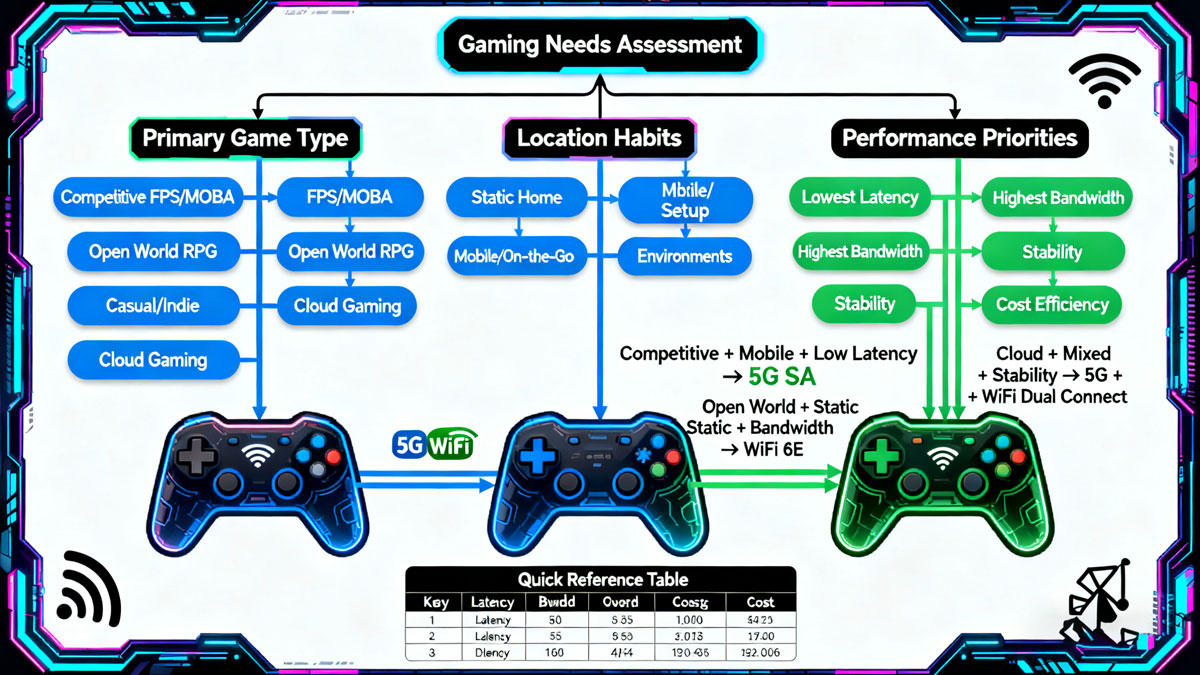
The question of best connection for gaming doesn't have a universal answer. Consider these factors:
Choose 5G When:
- Gaming on the go or in locations without reliable WiFi
- Primary internet connection is poor or unavailable
- Participating in location-based gaming experiences
- You have access to unlimited 5G data plan
Choose WiFi When:
- Gaming in fixed locations like home or office
- Requiring the most stable and consistent connection
- Playing competitive games where every millisecond counts
- You have control over network configuration and optimization
Maximize your gaming performance with the right connectivity solution. Xiamen Lineyi offers both 5G and WiFi antennas optimized for gaming applications.[Contact our technical team] for personalized gaming connectivity recommendations based on your specific setup and requirements.

点击右上角
分享给朋友吧







 Long by picture save/share
0
Copyright © Xiamen Lineyi Electronics Co., Ltd All rights reserved.
点击右上角
分享给朋友吧
